

Rarely Seen Hummingbird Moth Makes a Surprise Appearance in Evansville Garden
If you’ve never seen a hummingbird moth before, you’re in for a real treat – and this might just be the most fascinating thing you lay eyes on today. Seriously. Not this week, not necessarily this month...but definitely today. That’s because these little beauties are pretty tough to spot, even though they live all around us. I’m almost 50, and I can honestly say I’ve never seen one in person.
What Is a Hummingbird Moth?
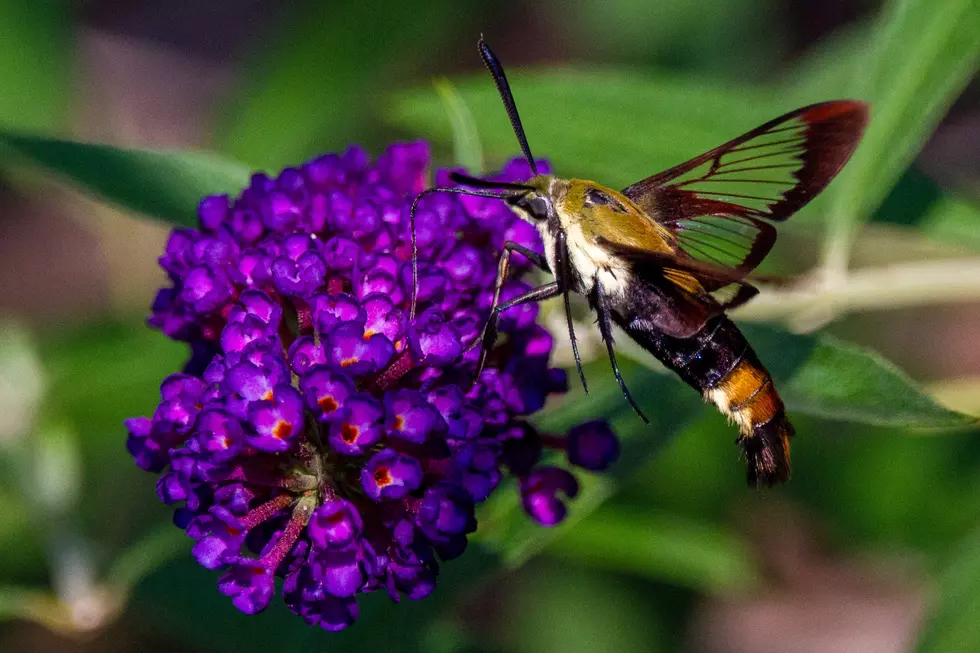
So, what exactly is a hummingbird moth? Well, at first glance, you might swear you’re looking at a tiny hummingbird – the way it hovers over flowers, zips from bloom to bloom, and even makes that soft, rapid “hum” with its wings. But nope, it’s not a bird at all...it’s a moth! A really cool, big ol’ moth that can even fool you into thinking it’s a bumblebee sometimes.
A Rare Sight in Evansville Gardens
Jeff Scott, here in Evansville, was lucky enough to catch one of these elusive creatures on video right in his own garden. And while they’re actually fairly common in North America, seeing one is another story entirely. Odds are, you’ve probably looked right at a hummingbird moth before and thought it was just a “regular” hummingbird, which, to be fair, is still a magical experience.
How to Spot a Hummingbird Moth
Now that you know they could be fluttering around Evansville, here are a few quick tips to tell them apart from the real-deal hummingbirds:
- Size: Moths are about half the size of hummingbirds.
- Antennae: Moths have ‘em, hummingbirds don’t.
- Mouth vs. Bill: Hummingbirds have long, pointy bills. Moths have a curled-up mouth when not feeding.
- Legs: Six for moths, two for birds.

So, have you seen one and not even realized it? Bet you’ll be watching a little closer the next time something hovers over your flowers!
7 Invasive Insects in Indiana You Should Kill Immediately If You See Them
Gallery Credit: Ryan O'Bryan
LOOK: 20 of the biggest insects in the world
Gallery Credit: Andrea Vale
More From My WJLT 105.3